

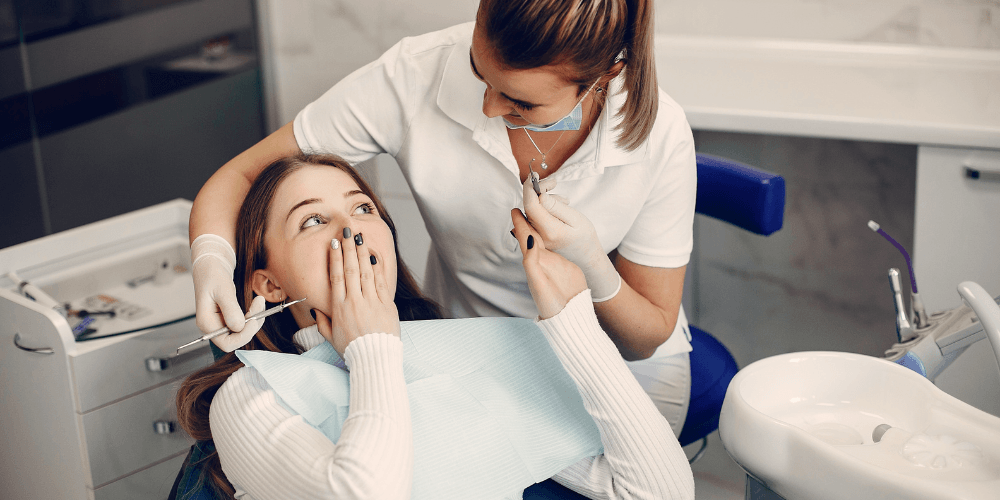
It is easy to assume that if your teeth are not causing discomfort, everything must be fine. Life gets busy, and without pain as a reminder, dental appointments can slip down the priority list. However, many oral health conditions develop quietly. Preventive dental visits are not just about fixing problems. They are about identifying subtle changes before they become more complex.
A routine dental examination is designed to assess far more than visible cavities. Asymptomatic dental disease is common. Early tooth decay, gum disease screening findings, enamel wear monitoring, and even oral cancer screening can reveal changes long before pain appears. This is why early detection in dentistry is such a key part of long term oral health.
How Can Dental Conditions Develop Without Symptoms?
The mouth is remarkably adaptable. In the early stages of tooth decay, the enamel may begin to soften without triggering discomfort. Gum inflammation can start with mild bleeding that is easy to overlook. Bite evaluation may reveal uneven wear patterns that do not feel obvious day to day.
Conditions that may progress silently include:
- Tooth decay that has not yet reached the nerve.
- Early gum disease without swelling or severe pain.
- Enamel wear from grinding or acid exposure.
- Small cracks in teeth that are not yet sensitive.
- Oral lesions that feel painless in early stages.
Professional dental cleaning also plays a significant role. Plaque assessment and tartar removal address hardened deposits that brushing alone cannot eliminate. Calculus build up can contribute to gum disease progression even in the absence of discomfort.
The table below outlines why pain is not a reliable indicator:
| Condition | Early Symptoms | Why Preventive Visits Matter |
| Tooth decay | Often none | Allows conservative management |
| Gum disease | Mild bleeding | Reduces progression risk |
| Enamel wear | Subtle surface change | Preserves structural integrity |
| Oral lesions | May be painless | Enables timely referral if required |
What Happens During a Preventive Dental Visit?
A preventive oral care appointment may include:
- Medical history review and lifestyle impact on oral health discussion.
- Thorough oral health assessment of teeth and gums.
- Gum disease screening and periodontal assessment.
- Diagnostic imaging where clinically indicated.
- Professional dental cleaning.
- Risk based recall schedule planning.
Risk factor identification is central to preventive dentistry. Smoking, diet, oral hygiene habits, and medical conditions can all influence oral health. Monitoring changes over time allows tailored preventive treatment planning.
The importance of dental clinic visits even without pain lies in tracking these subtle shifts. What looks stable today may show early signs of change at the next visit. Detecting those differences early can influence management decisions.
Why Is Early Detection So Valuable?
Oral diseases often follow a predictable progression. When detected early, changes may be managed with conservative measures rather than more extensive procedures. For example, identifying plaque accumulation before gum disease advances supports simpler interventions focused on oral hygiene education and plaque control strategies.
Australian oral health bodies have consistently emphasised the value of routine dental examination in reducing long term complications. Preventive care aligns with broader public health messaging that supports regular monitoring rather than reactive treatment.
How Does Artarmon Dentists Approach Preventive Care?
At Artarmon Dentists, preventive dentistry is viewed as a partnership. The focus is on oral hygiene education, monitoring enamel wear, evaluating gum health, and supporting informed decision making. Patients are guided through their oral health assessment findings in clear language, without unnecessary jargon. If you have delayed a visit because you feel fine, it may be reassuring to know that preventive visits are designed to maintain stability and identify small issues early. It is not about waiting for discomfort. It is about preserving oral health through consistent review.
What Does Australian Guidance Say About Routine Visits?
The Australian Dental Association encourages regular dental examinations tailored to individual risk levels. Healthdirect Australia also highlights that dental problems can develop without pain and that check ups help maintain oral health before complications arise.
Preventive oral care remains one of the most effective ways to maintain healthy teeth and gums over time.
References
Australian Dental Association. Oral health and regular dental visits.
https://www.ada.org.au
Healthdirect Australia. Dental check ups and preventive care.
https://www.healthdirect.gov.au
Dental Health Services Victoria. Preventive oral health information.
https://www.dhsv.org.au
Frequently Asked Questions
1. How often should I attend a dental examination?
The frequency depends on your individual risk factors. Your dental practitioner will recommend a suitable recall schedule.
2. Can gum disease really develop without pain?
Yes. Early stages of gum disease often present with mild bleeding or subtle inflammation rather than significant discomfort.
3. What is involved in gum disease screening?
It typically includes measuring gum health, assessing plaque levels, and checking for signs of inflammation.
4. Are dental X rays always required?
Diagnostic imaging is only taken when clinically indicated to support assessment.
5. If I brush and floss daily, do I still need professional cleaning?
Yes. Tartar, also known as calculus, cannot be removed with brushing alone.
6. Why is early detection important for oral health?
Identifying changes early allows more conservative management and supports long term oral stability.
Disclaimer
All dental procedures involve potential risks and benefits. The information provided in this blog is general in nature and should not be taken as medical advice. We recommend that you seek guidance from a suitably qualified health professional before making decisions about your oral health. Where appropriate, you may also wish to consider obtaining a second opinion.
Any images or videos featured are shared with the informed consent of our patients and are intended for educational purposes only. They are not a guarantee of results, as every patient is unique. Treatment outcomes — including recovery, potential complications, and effectiveness — can vary from person to person.